Define intended use
Age stage, weight guidance, caregiver scenario, stroller environment, textile contact, and gift context are confirmed before any claim is written.
Safety work is most useful when it becomes understandable. This page translates material review, fit guidance, restraint clarity, age-stage language, and recognized consumer standards into a practical framework for teams that sell or support Ergobaby products.
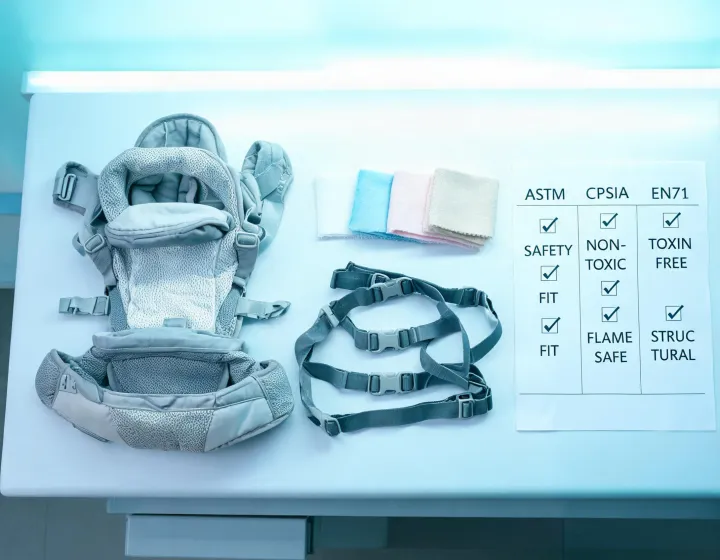
The roadmap follows the structure of a technical timeline, but every milestone is written for baby-care decisions rather than abstract compliance language.
Age stage, weight guidance, caregiver scenario, stroller environment, textile contact, and gift context are confirmed before any claim is written.
Relevant ASTM F963, CPSIA, EN71, chemical, labeling, restraint, and small-parts considerations are mapped to the product family.
Use guides are reviewed for clear fit cues, warning placement, cleaning directions, fold steps, and support language that caregivers can follow.
Retail, distributor, and service teams receive concise responses for common questions about fit, materials, age stage, and maintenance.
Seat, back panel, shoulder load, and hip support notes are reviewed so guidance stays practical and observable.
Textile handfeel, dye and finish notes, cleanability, buckle contact, mesh airflow, and label clarity receive structured review.
Compact stroller and ride-on guidance covers fold behavior, wheel handling, and restraint or seating instructions.
Rather than presenting badges as decoration, Ergobaby organizes safety information by the role it plays in the buyer journey.
Used when products overlap with play, ride-on, or accessory contexts that require age-stage and small-parts clarity.
Supports lead, phthalate, tracking label, and documentation conversations for baby and child product assortments.
Helps global teams align product descriptions, warning language, and family-facing safety explanations.
Connects caregiver comfort, child positioning, instruction clarity, and retail education into a single support model.
These counters describe how the review system behaves. They are not decorative claims; they are checkpoints that keep product pages, training notes, and support scripts aligned.
Share the product category, intended user stage, and any available documentation. We will help identify the next review step.